


By: JMPC Team
May 11, 2026
HOA Investments & Financial Management: What California Boards Should Actually Focus On in 2026
In HOA finance, the sexy mistake is usually the expensive one. In 2026, California boards should think about investments as a capital preservation and compliance job first, not a return-maximization game. State law requires reserve planning, monthly financial review, limits how reserve money is used, and imposes guardrails on how association funds held by a managing agent can be deposited and invested. (leginfo.legislature.ca.gov)
Estimated reading time: ~5 minutes.
The real goal is not “higher returns.” It is financial stability.
For most HOAs, good financial management starts with a simple split: operating funds cover monthly expenses, while reserve funds exist for major repair, replacement, restoration, and maintenance obligations. California law says reserve funds are not for general spending, except for limited temporary transfers handled under a specific process. (leginfo.legislature.ca.gov)
That changes the whole conversation. A strong board usually asks:
How protected is our principal?
How clean are our controls?
How accurate is our reserve plan?
How clearly can we explain all of this to members?
That mindset fits both the law and common-sense governance in California. (leginfo.legislature.ca.gov)
What California boards should review every year
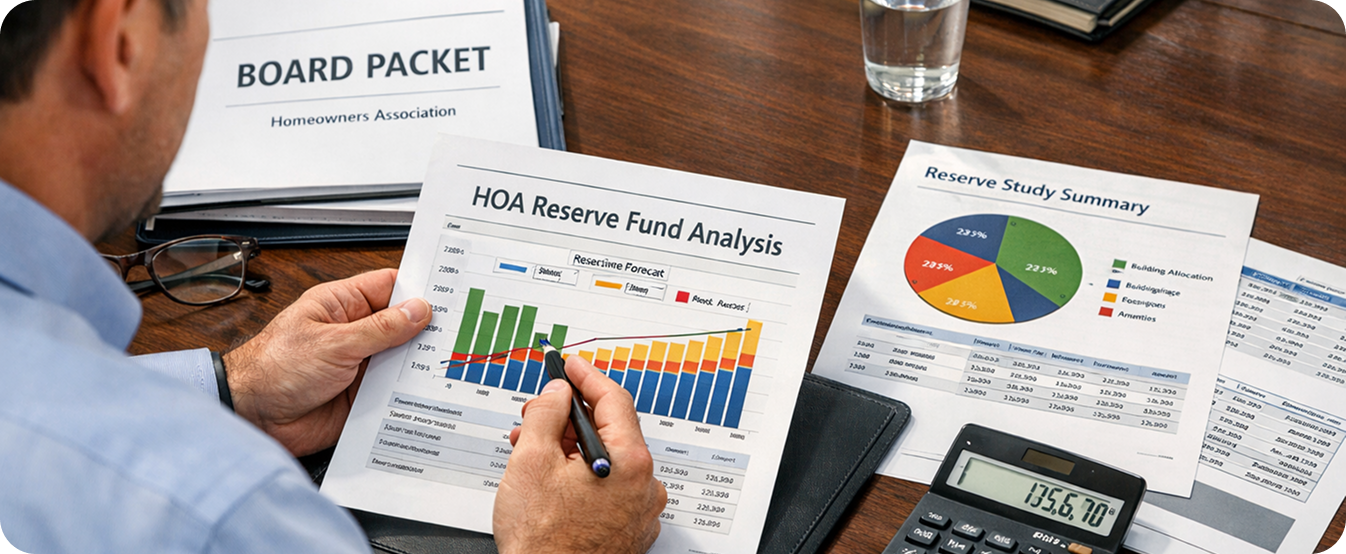
California requires a reasonably competent visual reserve study at least every three years when the replacement value threshold is met, and the board must review that study annually and implement needed adjustments. The study must identify major components, remaining useful life, estimated costs, and a reserve funding plan. Since January 1, 2025, “major components” also include certain gas, water, and electrical service lines when the association is responsible for them. (leginfo.legislature.ca.gov)
The reserve funding plan must also include a schedule showing when regular or special assessment changes would be needed to sufficiently fund the plan, and that plan must be adopted by the board in an open meeting. (leginfo.legislature.ca.gov)
Then comes disclosure. California’s reserve summary, which is part of the annual budget reporting framework, must be based on the most recent reserve review or study and be based only on assets held in cash or cash equivalents. It must show replacement cost, reserve cash needed, reserve cash actually on hand, percent funded, and the reserve deficiency on a per-unit basis. (leginfo.legislature.ca.gov)
Pro Tip: If your board cannot explain, in one minute, your reserve balance, percent funded, and next three big-ticket components, you do not have an investment problem yet. You have a reporting problem.
What “investments” usually look like for a healthy HOA
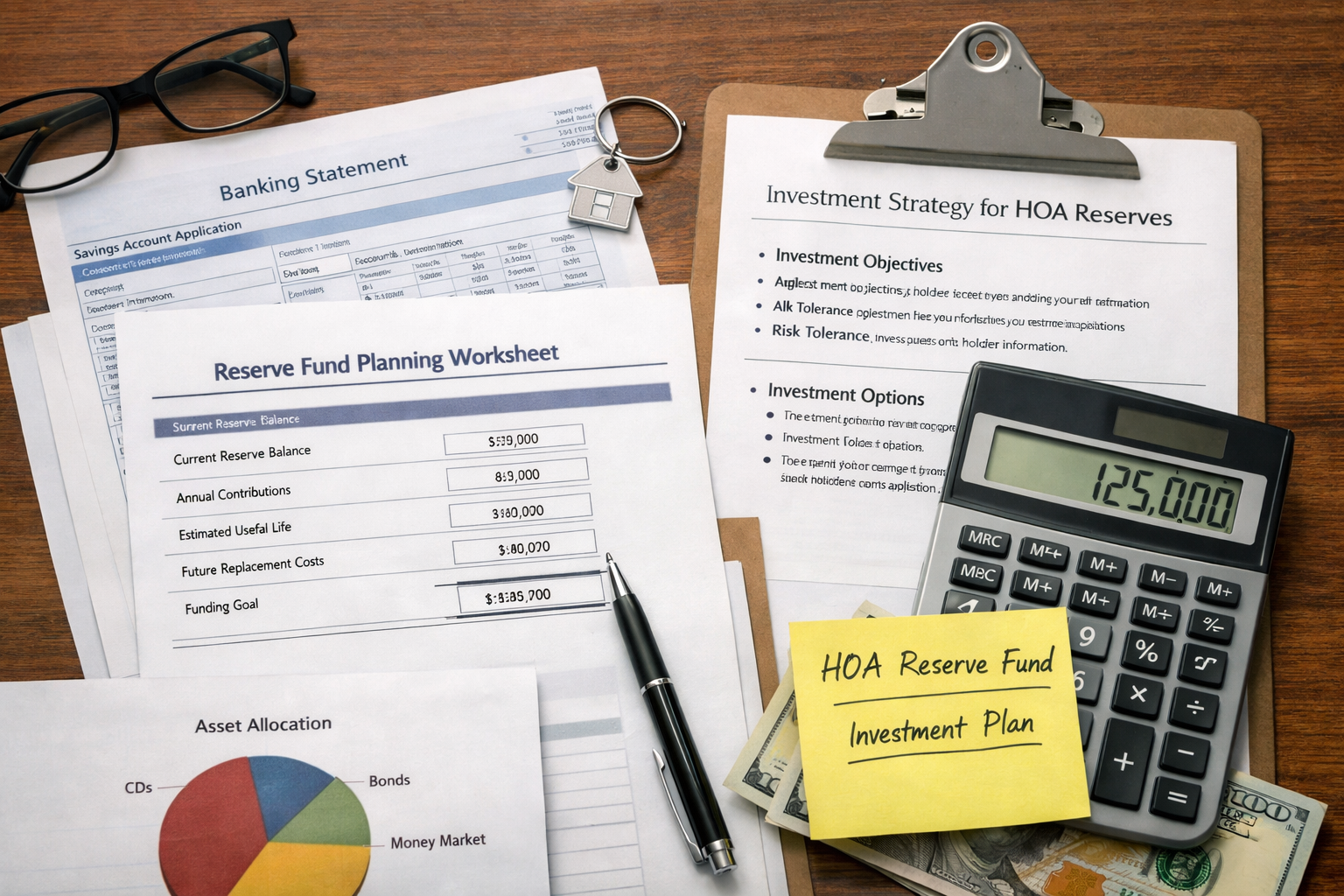
For most California associations, prudent investment management is boring on purpose. Think insured bank products, protected principal, liquidity planning, and a ladder that matches reserve timing. If a managing agent is holding association funds, California law requires the money to be kept in insured in-state institutions, protected as to principal, kept separate from other funds, and not invested in stocks or high-risk options. (leginfo.legislature.ca.gov)
Even outside the managing-agent context, that same conservative logic is the right operating standard for most HOA boards. Why? Because the board is balancing reserve timing, emergency access, disclosure integrity, and owner trust. A board that stretches for yield but creates liquidity problems, accounting confusion, or delayed repairs is usually losing the big game. That approach is also consistent with industry guidance around prudent reserve handling and separate tracking of operating and reserve money. (davis-stirling.com)
A practical board approach often looks like this:
- keep operating cash highly liquid,
- keep reserves segmented and tracked clearly,
- match maturities to known reserve projects,
- avoid speculative products,document every financial decision like an owner will read it later.
That is not flashy, but it is exactly how communities avoid panic special assessments. (leginfo.legislature.ca.gov)
The controls matter as much as the return
California requires monthly board review of operating account reconciliations, reserve account reconciliations, actual-vs-budget results, financial institution statements, income and expense statements, the check register, general ledger, and delinquent assessment receivables—unless the governing documents are stricter. (leginfo.legislature.ca.gov)
Reserve withdrawals also require stronger controls. At least two signatures are required for withdrawals from reserve accounts, and reserve money may not be spent on unrelated purposes. (leginfo.legislature.ca.gov)
If the board needs to temporarily transfer reserve money into operations, California law allows it only with advance meeting notice, stated reasons, repayment planning, a written finding in the minutes, and restoration generally within one year unless the board properly documents a temporary delay. The board must exercise prudent fiscal management and may need a special assessment to restore the account. (leginfo.legislature.ca.gov)
That means “financial management” is not just investing cash. It is also workflow: approvals, minutes, reconciliations, separation of funds, and timely board review. Boards that ignore that side often think they have a cash strategy when they really have a governance gap. (leginfo.legislature.ca.gov)
What Los Angeles–area HOA boards should watch in 2026
The pressure on reserves is not theoretical. California reserve law already requires regular study, annual review, and transparent disclosure, and the broader compliance environment has become tougher as boards face aging infrastructure, utility-line responsibilities, and more owner scrutiny around financial records. (leginfo.legislature.ca.gov)
In practical terms, that means LA-area boards should review three things now:
- whether reserve components are fully updated to reflect current responsibility,
- whether cash and cash equivalents are organized cleanly enough for annual disclosure, and
- whether upcoming maintenance timing matches current bank products and liquidity.
If those three do not line up, the board may be under-earning, over-restricting liquidity, or drifting toward avoidable assessment pressure. (leginfo.legislature.ca.gov)
A simple board checklist
1) Reconfirm your reserve map
Make sure the reserve study reflects what the HOA truly maintains in 2026, including any utility-line obligations that now fall into the reserve conversation. (leginfo.legislature.ca.gov)
2) Separate strategy by purpose
Do not manage operating cash and reserve cash like they are the same bucket. Even where a single account structure may be technically workable with proper accounting, the safer practice is clean separation and clean reporting. (davis-stirling.com)
3) Match money to timing
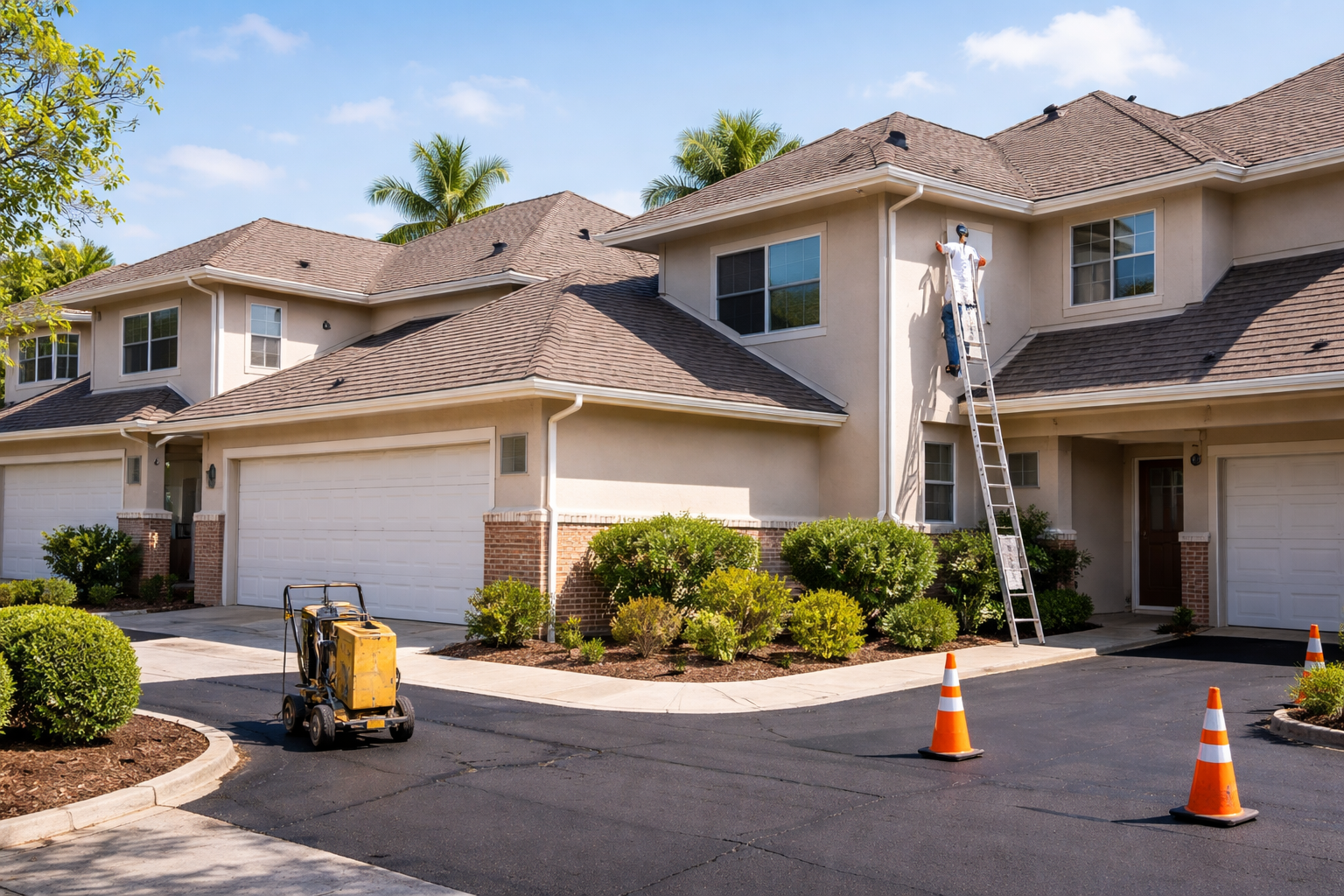
If a major roof, paving, elevator, pool, or line project is getting closer, do not lock too much money away chasing an incremental yield. Liquidity has value. (leginfo.legislature.ca.gov)
4) Tighten approvals
Use board-level written approvals, keep minutes strong, and avoid casual transfers. This is where small sloppiness becomes big distrust. (leginfo.legislature.ca.gov)
5) Tell members the truth early
If the reserve funding plan points toward assessment changes, communicate that before it becomes a crisis. California law already expects those assessment-change needs to be reflected in the funding plan. (leginfo.legislature.ca.gov)
Mini-case vignette
A 42-unit HOA has aging roofs, rising insurance, and reserve cash sitting in low-visibility accounts with weak board reporting. The association is not “broke,” but the board cannot confidently say what percent funded it is or when cash will be needed. After updating the reserve review, aligning maturities to the next 24 months of projects, and tightening monthly financial review, the board has not magically created wealth—it has created clarity. And in HOA finance, clarity is usually what prevents ugly surprises. This vignette is illustrative, but it mirrors exactly the structure California law is designed to force boards toward. (leginfo.legislature.ca.gov)
If your board wants cleaner cash management, sharper reserve planning, and reporting that owners can actually trust, JPMC can help your HOA tighten the financial side without making it feel overwhelming. Start a quick consult with JPMC.
Deck / TL;DR
Deck: For California HOAs, “investing” is usually less about chasing yield and more about protecting reserves, keeping disclosures clean, and making disciplined board decisions. Here’s the practical version for boards in Los Angeles County.
- In California, HOA investing should usually mean protect principal, preserve liquidity, and document everything. (leginfo.legislature.ca.gov)
- Reserve funds are for major components, not general spending, except limited temporary transfers with a formal process. (leginfo.legislature.ca.gov)
- Boards must review finances monthly and reserve studies annually, with a full visual reserve study at least every three years when the threshold is met. (leginfo.legislature.ca.gov)
- Reserve disclosures must be based on cash or cash equivalents and show percent funded and reserve deficiency. (leginfo.legislature.ca.gov)
- The smartest HOA financial strategy in 2026 is usually the least dramatic one.
FAQs
Q: Can an HOA invest reserve money in stocks to earn more?
A: If a managing agent is holding association funds, California law expressly says those funds may not be invested in stocks or high-risk investment options. More broadly, most boards should treat HOA reserves as principal-protection money, not speculation money. (leginfo.legislature.ca.gov)
Q: How often does the board need to review HOA finances?
A: California requires monthly review of reconciliations, statements, actual-vs-budget results, and key accounting reports unless governing documents require more. (leginfo.legislature.ca.gov)
Q: How often does an HOA need a reserve study in California?
A: At least every three years for the visual inspection/study, with annual board review and adjustment of the funding analysis. (leginfo.legislature.ca.gov)
Q: Can the board borrow from reserves?
A: Temporarily, yes, but only through the statutory process: notice, reasons, minutes, repayment plan, and restoration generally within one year unless properly delayed. (leginfo.legislature.ca.gov)
Q: What should owners ask to judge HOA financial health?
A: Ask about percent funded, cash reserves on hand, the next major projects, and whether the reserve funding plan anticipates assessment changes. California disclosure law is built around those questions. (leginfo.legislature.ca.gov)
What to do next
- Review your latest reserve study, reserve summary, and monthly board financial package together.
- Check whether your reserve cash placement matches your actual project timing.
- Get a second set of eyes on controls, disclosures, and funding strategy before small issues become special assessments.
— External Sources —
[1] California Civil Code §5510 – reserve withdrawals and permitted use of reserve funds. (leginfo.legislature.ca.gov)
[2] California Civil Code §5515 – temporary reserve transfers, notice, findings, and repayment. (leginfo.legislature.ca.gov)
[3] California Civil Code §§5550, 5560, 5565, 5500 – reserve studies, funding plans, reserve disclosure, and monthly financial review. (leginfo.legislature.ca.gov)
[4] California Civil Code §5380 – insured accounts, principal protection, no stocks/high-risk options for funds held by a managing agent. (leginfo.legislature.ca.gov)
2 Responses
I Love the Christmas Parade in Montrose! See you there!!!
I was more than happy to seek out this internet-site.I needed to thanks in your time for this wonderful read!! I positively enjoying every little little bit of it and I have you bookmarked to check out new stuff you weblog post.