



By: JMPC Team
Apr 27, 2026
Electronic Voting for California HOAs: Is It Right for Your Community in 2026?
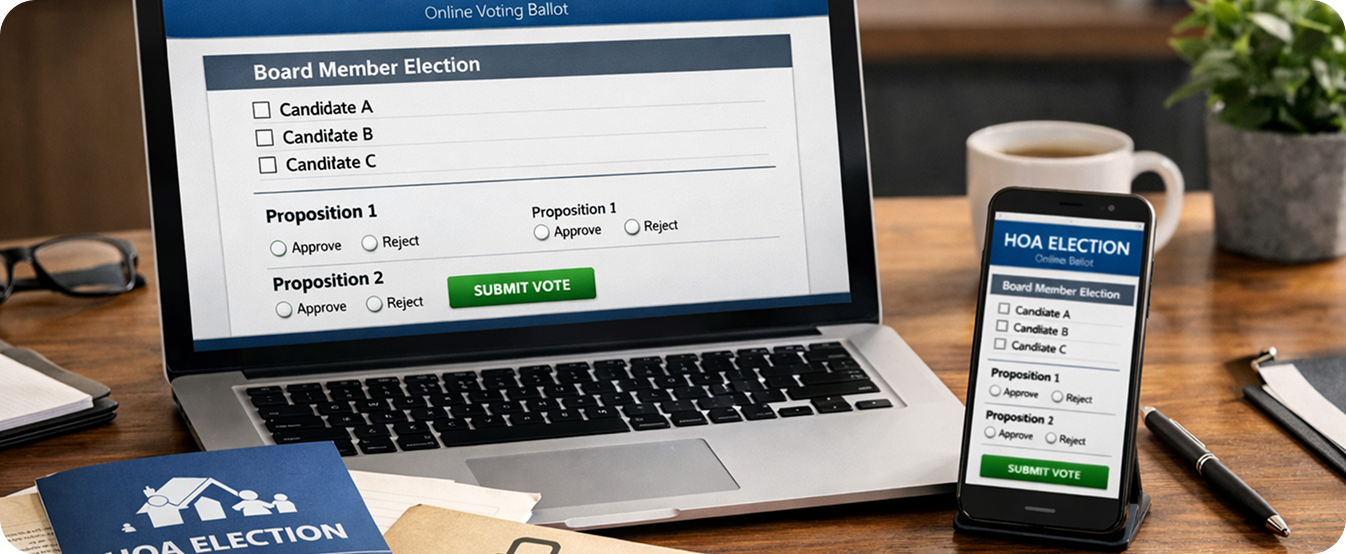
If your HOA struggles to get ballots back on time, misses quorum, or spends too much effort chasing paper envelopes, electronic voting is worth a serious look in 2026. California law now allows HOAs to adopt election rules that permit electronic secret ballots in many association elections, while still requiring inspectors of elections, authentication safeguards, and an open meeting to count the votes. But it is not a fit for every community, and it does not apply to every vote. (Legislación de California)
Estimated reading time: 4 minutes.
What changed in California HOA elections
California’s updated Davis-Stirling framework now allows an association to adopt an election operating rule to conduct elections by electronic secret ballot, notwithstanding contrary governing-document language, as long as the association follows the statutory safeguards. The change came through AB 2159, and Davis-Stirling election guidance reflects that electronic balloting is available beginning in 2025 and remains relevant in 2026. (Legislación de California)
There are two big catches. First, your HOA must amend its election rules before using electronic voting. Second, electronic secret ballot voting is not allowed for elections regarding regular or special assessments. In other words: great option for many board elections and member votes, but not a universal replacement for every ballot your association might send. (Legislación de California)
When electronic voting makes sense
Electronic voting usually makes the most sense for communities that have at least one of these problems:
1) Low participation
If your association repeatedly struggles to get ballots returned, digital voting can reduce friction. California’s election materials now contemplate timelines and procedures for elections using ballots or electronic voting, which tells you this is no longer an edge case. (Davis-Stirling)
2) Owners who prefer digital communication
California law already lets members manage preferred delivery methods for notices and records, including email-related preferences. For HOAs with many owners who live off-site, travel often, or already interact digitally, electronic voting can feel more natural than paper mail. (Legislación de California)
3) Administrative drag
Traditional elections involve mailing packets, tracking envelopes, handling logistics with inspectors, and fixing preventable errors. Electronic voting does not eliminate process, but it can simplify execution once the rules and vendor setup are done correctly. (Legislación de California)
Pro Tip: Electronic voting is not a magic trick. It works best when your HOA first cleans up its election rules, owner contact data, quorum strategy, and communication process.
What your HOA still has to do
Even with electronic voting, California keeps important guardrails in place.
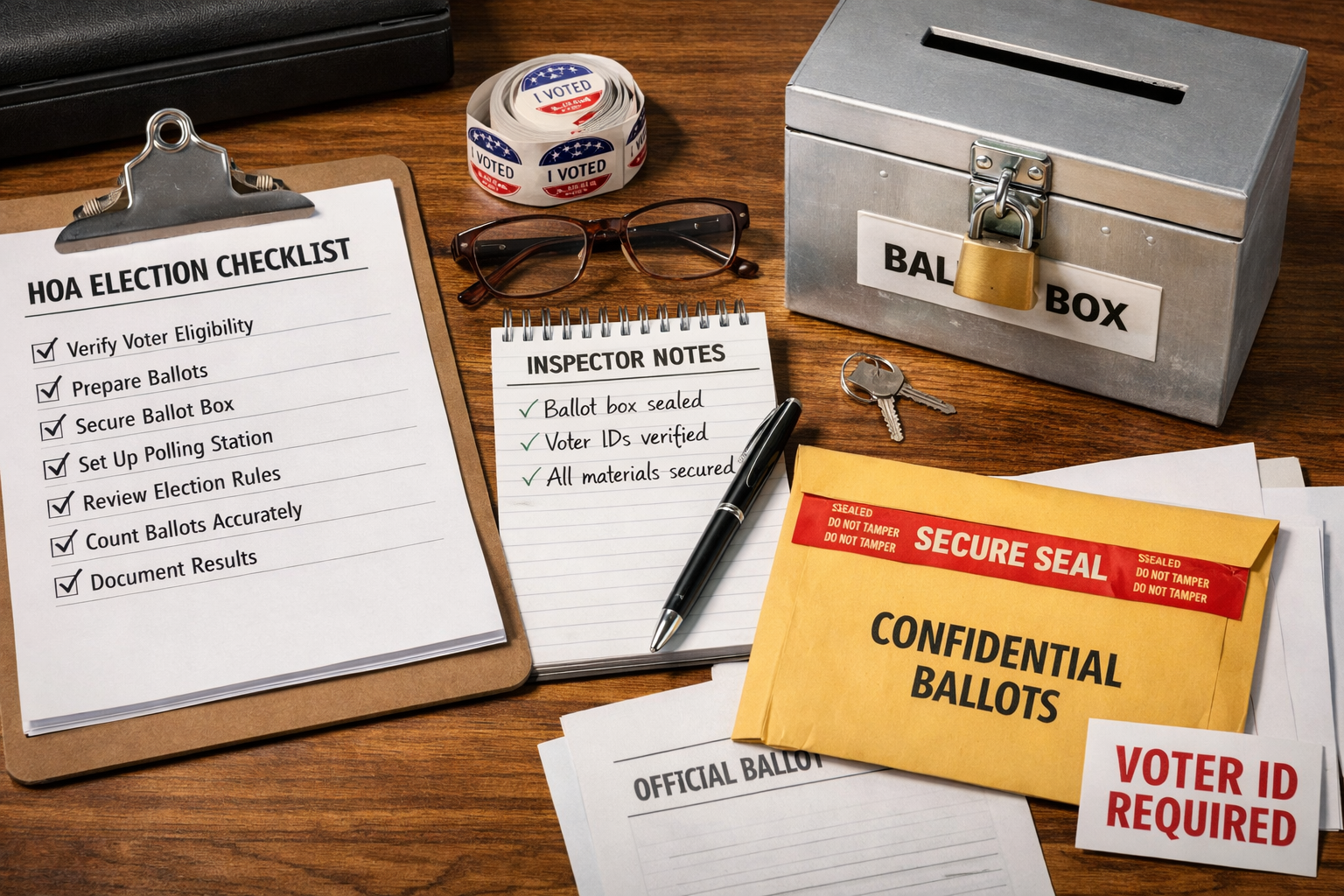
You still need inspectors of election
The association must select an independent third party as inspector of elections, and that inspector remains responsible for core election functions. If the election is conducted by electronic secret ballot, the inspector must also ensure the required compliance steps are followed. (Davis-Stirling)
You still need election rules
California requires HOAs to adopt election rules, and Davis-Stirling guidance is explicit that associations using electronic voting must first amend those rules. If you want to use electronic voting for a director election, the timing matters: the rules need to be in place early enough to satisfy the notice timeline. (Davis-Stirling)
You still need notice, authentication, and a count meeting
AB 2159 requires the electronic voting process to include identity authentication and a way for the member to confirm that their device can successfully communicate with the internet-based voting system at least 30 days before the voting deadline. The legislation also preserves the requirement for the votes to be counted at a properly noticed open meeting. (Legislación de California)
Where electronic voting may not be the right fit
Electronic voting is not automatically better for every community.
A very small HOA with stable participation and simple elections may not need the added setup. An older community with low comfort using email, portals, or voting links may create more confusion than convenience. And any HOA with messy owner records, unresolved delivery preferences, or outdated election rules should fix those basics first, or the digital rollout can become a headache. These are practical inferences based on the statutory requirements for notices, member preferences, and election administration. (Legislación de California)
Another key limitation: electronic voting is not for regular or special assessment votes. If your board thinks “great, now we can digitize every membership vote,” that is too broad. You need to check the vote type before deciding whether electronic voting is legally available. (Legislación de California)
A simple decision test for boards
If you answer “yes” to most of these, electronic voting is probably worth evaluating:
- Your HOA regularly struggles with ballot returns or quorum. (Davis-Stirling)
- Many owners are absentee, investor, or second-home owners who prefer digital communication. (Legislación de California)
- Your board is willing to update election rules and follow the timeline correctly. (Davis-Stirling)
- You can work with a qualified inspector of elections and a compliant system. (Davis-Stirling)
- The vote is not a regular or special assessment vote. (Legislación de California)
If you answer “no” to most of these, your HOA may be better off improving its paper election process first.
Local and legal nuances for California HOAs
For director elections, Davis-Stirling guidance notes that if an association wants to amend its election rules to allow electronic balloting, it should do so well in advance because of the member review period and election notice timeline. The practical message is simple: this is not a last-minute switch. (Davis-Stirling)
Also, electronic voting does not erase recordkeeping duties. Election materials remain subject to custody and inspection rules, and legislation tied to electronic secret ballots specifically discusses custody and inspection of the tally sheet for votes cast electronically. (Legislación de California)
Finally, electronic voting can help with quorum math. Davis-Stirling guidance states that members voting electronically count toward quorum in the relevant context. That can be a meaningful operational benefit for communities that repeatedly stall out on election day. (Davis-Stirling)
— Internal Links —
- HOA management services → /hoa; useful for boards that need help updating procedures, owner communication, and annual election planning.
- Financial and administrative support → /accounting-financial; relevant when election execution, records, and vendor coordination overlap with core operations.
- Contact JPMC → /contact; best next step if your board wants to evaluate whether electronic voting fits your community.
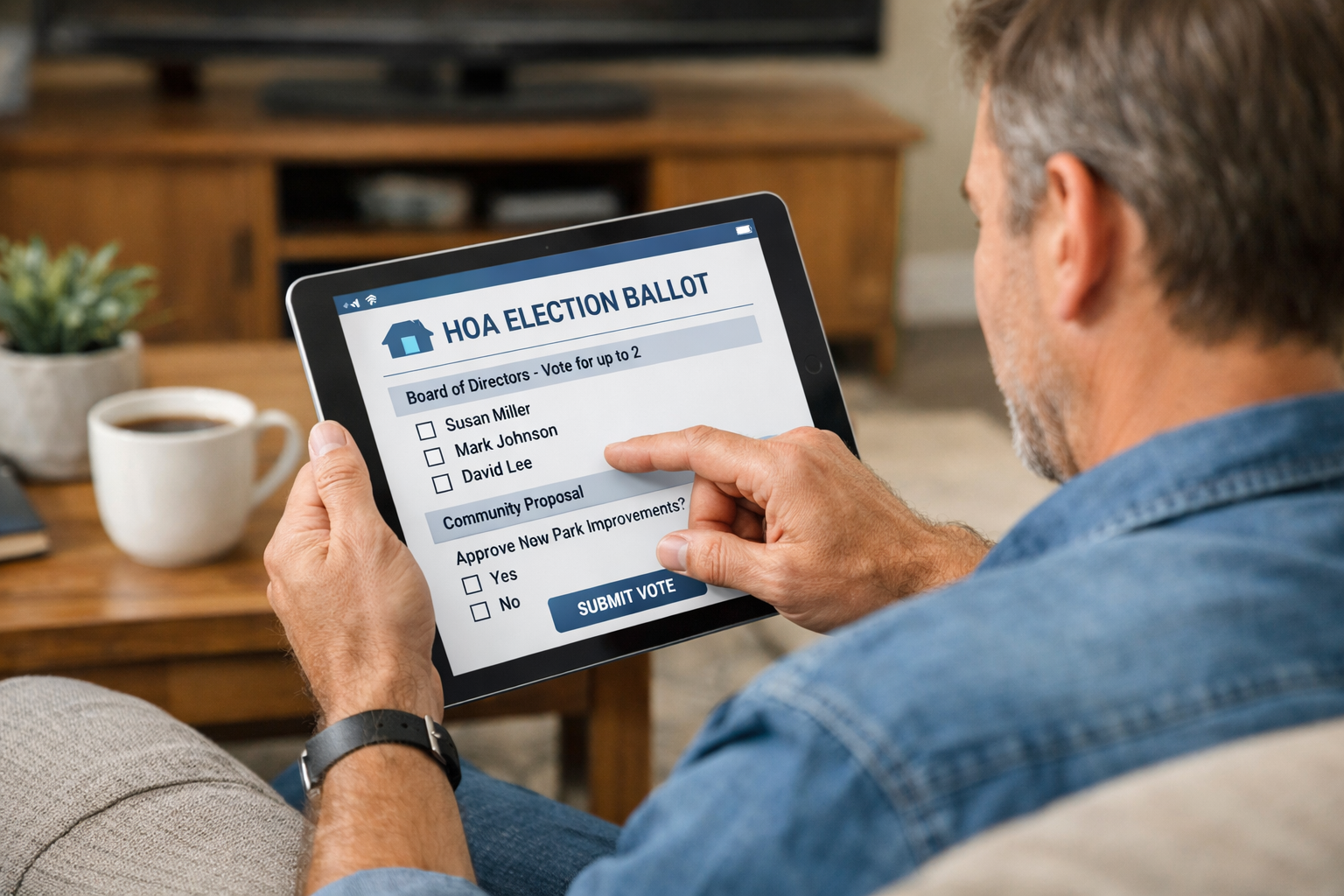
Thinking about electronic voting for your HOA? JPMC can help your board review the process, clean up communication, and prepare for a smoother election cycle before you make the switch. Start a quick consult with JPMC.
Deck / TL;DR
California HOAs can now use electronic secret ballots for many association elections if they adopt the right election rules and keep the required safeguards in place. Here’s the practical version: what changed, where electronic voting helps, and where it still does not apply. (Legislación de California)
- California HOAs can now use electronic secret ballots for many elections if they adopt compliant election rules first. (Legislación de California)
- You still need an independent inspector of elections, notice requirements, authentication safeguards, and an open vote-counting meeting. (Davis-Stirling)
- Electronic voting is not allowed for regular or special assessment elections. (Legislación de California)
- It is most useful for communities with low participation, absentee owners, or chronic election friction. (Davis-Stirling)
FAQs
Q: Can every California HOA use electronic voting now?
A: Not automatically. The HOA must first adopt compliant election rules that allow it. (Davis-Stirling)
Q: Does electronic voting replace inspectors of election?
A: No. California still requires an independent inspector of elections, and that inspector has added compliance responsibilities for electronic secret ballots. (Davis-Stirling)
Q: Can we use electronic voting for special assessments?
A: No. AB 2159 excludes elections regarding regular or special assessments. (Legislación de California)
Q: Will electronic voting help with quorum?
A: It can. Davis-Stirling guidance says members voting electronically count toward quorum in the relevant election context. (Davis-Stirling)
Q: Is this legal advice?
A: No. This is informational only. Boards should coordinate with management and legal counsel before changing election rules or rollout procedures.
What to do next
- Review your current election rules and confirm whether they allow electronic voting.
- Check owner delivery preferences and contact data before changing the process.
- Evaluate the vote types your HOA runs most often and whether electronic voting legally fits them.
— External Sources —
[1] AB 2159 legislative comparison text – leginfo.legislature.ca.gov (Legislación de California)
[2] Civil Code § 5105 Election Rules – davis-stirling.com (Davis-Stirling)
[3] Civil Code § 5110 Inspectors of Election – davis-stirling.com (Davis-Stirling)
[4] HOA Election Rules / Electronic Voting guidance – davis-stirling.com (Davis-Stirling)
2 Responses
I Love the Christmas Parade in Montrose! See you there!!!
I was more than happy to seek out this internet-site.I needed to thanks in your time for this wonderful read!! I positively enjoying every little little bit of it and I have you bookmarked to check out new stuff you weblog post.