



By: JMPC Team
Apr 20, 2026
Communication With Your HOA Community: What Actually Builds Trust in 2026
In most communities, communication problems show up long before legal problems do. Residents feel ignored, boards feel overwhelmed, and small issues turn into avoidable conflict. In 2026, the strongest HOA communities in Los Angeles are not necessarily the ones with fewer problems. They are the ones with clearer updates, better notice practices, and more consistent follow-through. For California HOAs, that practical work sits on top of real legal rules for email delivery, general notice, open meetings, and annual policy disclosures. (leginfo.legislature.ca.gov)
Estimated reading time: 5 minutes.
Why communication matters more than most boards think
Poor communication creates three expensive problems fast: mistrust, confusion, and escalation. When owners do not understand what the board is doing, why assessments changed, why a repair is delayed, or how a rule is enforced, they usually fill in the blanks themselves. That is where friction starts.
Strong communication does the opposite. It helps residents understand timelines, board authority, maintenance priorities, and how to participate. It also supports better operations, because California law already assumes associations will communicate through defined notice channels, not improvised last-minute messaging. Under Civil Code Section 4040, required individual notices generally go by email unless the member has not provided a valid email address or has revoked email consent. (leginfo.legislature.ca.gov)
What good HOA communication looks like in practice
A well-run HOA usually communicates in layers, not in bursts.
1) Use the right channel for the right message
Not every issue belongs in the same format.
- Urgent operational issues: email + text alert if your system supports it
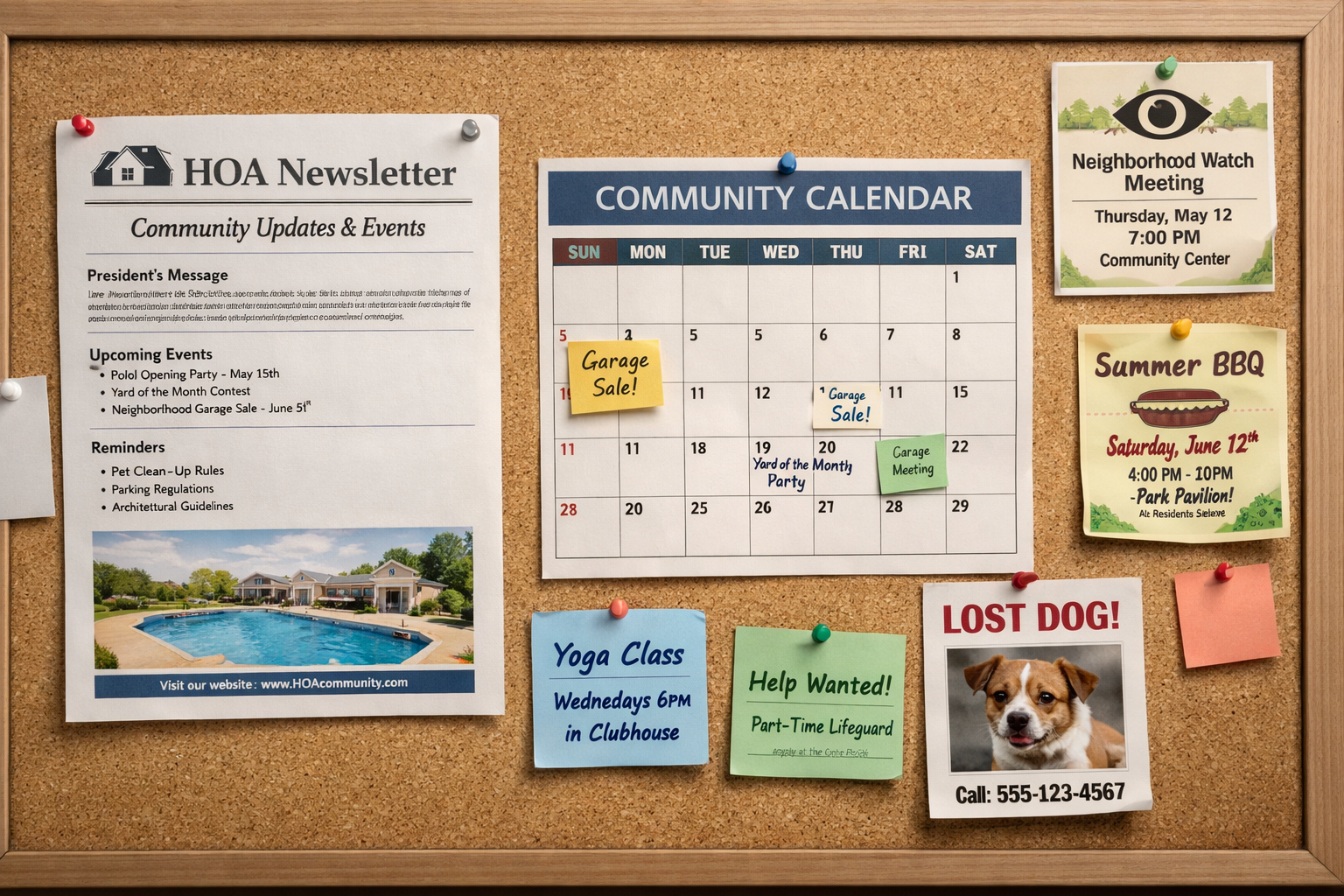
- Routine updates: monthly newsletter or owner update
- Board business: formal meeting notice and agenda
- Policy reminders: clear, neutral summaries tied to governing documents
- Community-building: event reminders, seasonal tips, service updates
California also allows “general notice” in several ways, including inclusion in a newsletter, posting in a designated location, or posting on an association website maintained under Civil Code Section 4801. For communities with 50 or more separate interests, the statute says the association must maintain a website unless two-thirds of the members approve otherwise. (leginfo.legislature.ca.gov)
2) Be consistent, not dramatic
Boards often over-communicate during conflict and disappear when things are calm. That is backwards.
A better rhythm looks like this:
- Monthly owner update
- Clear pre-meeting notice and agenda
- Short post-meeting recap
- Immediate updates on major repairs, safety issues, or assessment-related changes
That cadence reduces anxiety because owners stop feeling like information only shows up when something is wrong. It also fits well with California’s annual and meeting-related disclosure structure. The annual policy statement must go out 30 to 90 days before the end of the fiscal year and include several communication-related disclosures, including where general notices may be posted and a member’s option to receive general notices by individual delivery. (leginfo.legislature.ca.gov)
3) Write like a human, not like a warning label
Residents do not need ten paragraphs of defensive board language every time something changes.
Good HOA writing is:
- direct
- respectful
- brief
- specific about dates and next steps
- neutral in tone
Bad HOA writing is vague, passive, legalistic, or emotionally loaded.
Pro Tip: If a resident cannot understand your update in under one minute, it is probably too long or too padded.
The legal side California boards should not ignore
Communication is not only a soft skill. In California, some of it is regulated.
Email and delivery preferences
Under the current Civil Code framework reflected in SB 981, associations generally send required individual notices by email, unless the member has not provided a valid email address or has revoked consent. Members may also request a secondary email or mailing address for certain notices, and the association must annually solicit member notice information for its books and records. (leginfo.legislature.ca.gov)
General notice
For general notices, associations can use:
- a method allowed for individual notice
- a billing statement or newsletter
- posting in a designated prominent location
- association TV programming, if applicable
- the association website
Members can also request to receive general notices by individual delivery, and that option must be described in the annual policy statement. (leginfo.legislature.ca.gov)
Open meetings
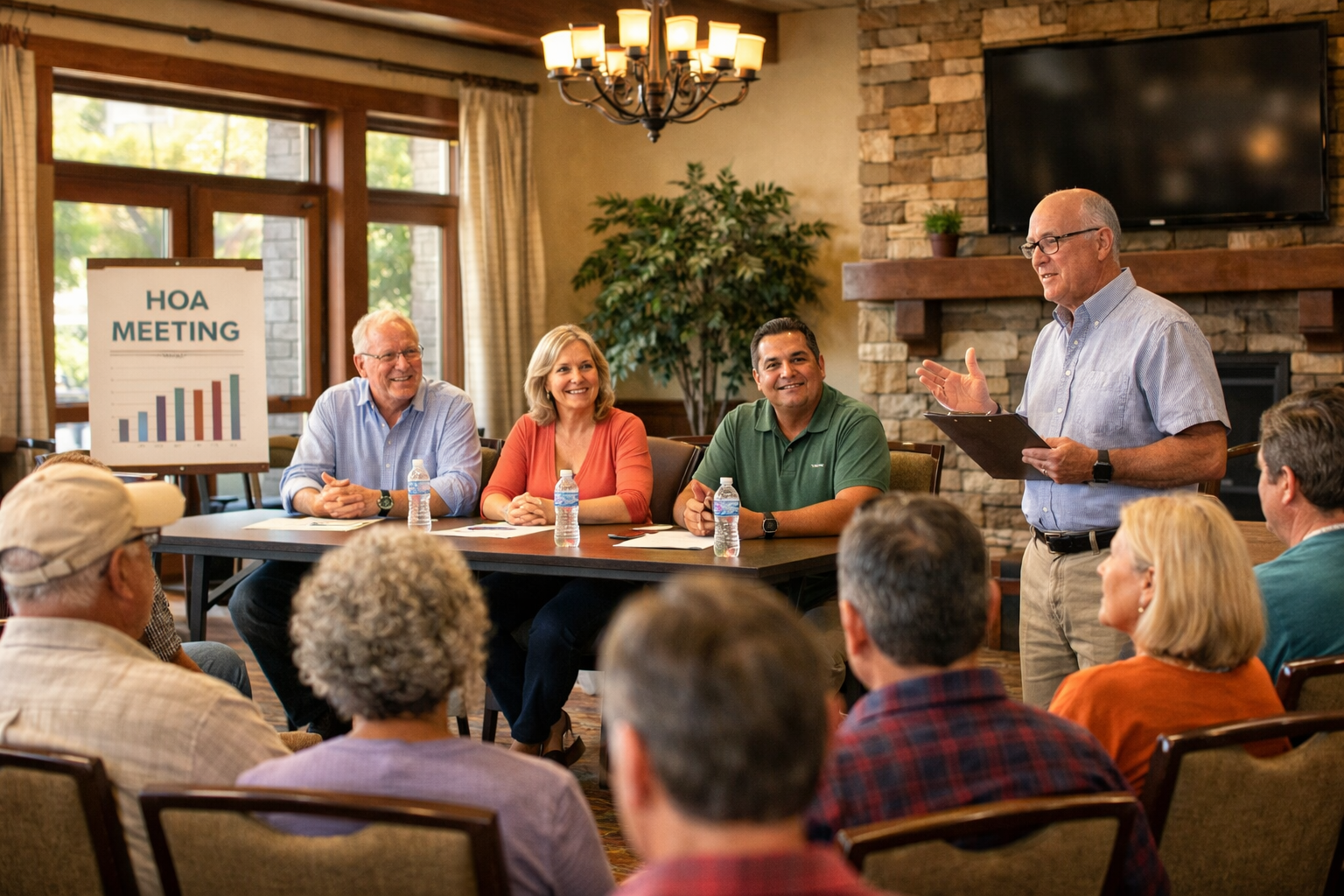
California law gives members the right to attend board meetings except for valid executive-session matters. That means communication before and around meetings matters. Members should know when meetings happen, what is on the agenda, and how to follow board action without guessing. (Krigershuber)
A simple communication framework most HOAs can use
Here is a clean operating model for a typical HOA board or manager in LA County:
Monthly
- Send a short community update
- Highlight repairs in progress
- Share one financial or project milestone
- Remind residents how to submit requests
Before each board meeting
- Send the notice and agenda on time
- Keep agenda labels plain-English
- Separate action items from discussion items
After each board meeting
- Share a short recap of what owners most care about
- Clarify what changed, what did not, and what comes next
Annually
- Review owner contact data
- Confirm email and secondary delivery preferences
- Update website posting locations and policy statement details
- Refresh templates for newsletters, notices, and maintenance alerts
This kind of system works especially well for firms like JPMC, whose HOA management positioning already emphasizes communication and community engagement, transparent service, and ongoing board support. (JPMC)
Local nuance for Los Angeles HOAs
LA-area communities tend to deal with a mix of operational noise: vendor scheduling, parking friction, maintenance timing, insurance pressure, budget sensitivity, and residents who expect fast digital communication. That makes channel discipline even more important.
For a Montrose-, Glendale-, or Pasadena-adjacent HOA, the practical win is not “more content.” It is a clearer system:
- one primary owner email stream
- one visible location for general notices
- one website area for documents and updates
- one predictable cadence for board communication
JPMC’s own site leans heavily into that same value proposition: transparent communication, clear reporting, and community-centered service for HOA boards and owners across its service model. (JPMC)
Need a clearer communication system for your HOA? JPMC helps boards create cleaner updates, better owner engagement, and more organized operations across communication, maintenance, and reporting. Start a quick consult with JPMC.
Deck / TL;DR
Good HOA communication is not just about sending more emails. In California, it also means using the right delivery methods, giving proper notices, and making it easy for members to stay informed and involved. (leginfo.legislature.ca.gov)
- Strong HOA communication reduces mistrust before it turns into conflict.
- In California, communication is partly operational and partly legal: email delivery, general notice, and annual disclosures all matter. (leginfo.legislature.ca.gov)
- The best boards use a steady rhythm: notice, update, recap, repeat.
- A community does not need more noise. It needs clearer systems.
FAQs
Q: Can an HOA in California send required notices by email?
A: Generally yes. Under the current delivery rules reflected in Civil Code Section 4040, required individual notices are generally delivered by email unless the member has not provided a valid email address or has revoked consent. (leginfo.legislature.ca.gov)
Q: Can owners ask for notices at a second address?
A: Yes. Members may request a secondary email or mailing address for certain notices, and the association must honor that request when the statute applies. (leginfo.legislature.ca.gov)
Q: Can general notices be posted on a website?
A: Yes. California allows general notice on an association website, and for associations with 50 or more separate interests, the statute says a website must generally be maintained unless two-thirds of members approve otherwise. (leginfo.legislature.ca.gov)
Q: What should every HOA communicate regularly?
A: At minimum: board meeting timing, major maintenance updates, policy reminders, financial milestones, and what residents should expect next. That last point is best practice rather than a single statutory checklist, but it aligns with California’s notice and disclosure structure. (leginfo.legislature.ca.gov)
What to do next
- Audit your current HOA communication channels and templates.
- Confirm owner contact information, email preferences, and notice workflows.
- Set a monthly update rhythm that residents can actually trust.
— External Sources —
[1] California Legislature bill text reflecting current delivery, notice, website, and annual policy statement rules under SB 981. (leginfo.legislature.ca.gov)
[2] Civil Code Section 5310 summary regarding the annual policy statement and required policy disclosures. (Davis-Stirling)
[3] Civil Code Section 4925 summary on members’ rights to attend open board meetings. (Krigershuber)
2 Responses
I Love the Christmas Parade in Montrose! See you there!!!
I was more than happy to seek out this internet-site.I needed to thanks in your time for this wonderful read!! I positively enjoying every little little bit of it and I have you bookmarked to check out new stuff you weblog post.